
AI Art vs. Human Art
Week 2: AI Art will make Human creativity more valuable, not less
What makes something valuable? More specifically, what makes art valuable? Art that’s worth the effort of stopping, paying attention to, and investing time, money, and resources in. Is it the social clout? Enough people say something is popular, therefore it is? Is it the time put into the art? Or the expertise of the person who created it? Is it simply supply and demand? If something is easily replicable, does it still have value over something that only exists once in time?
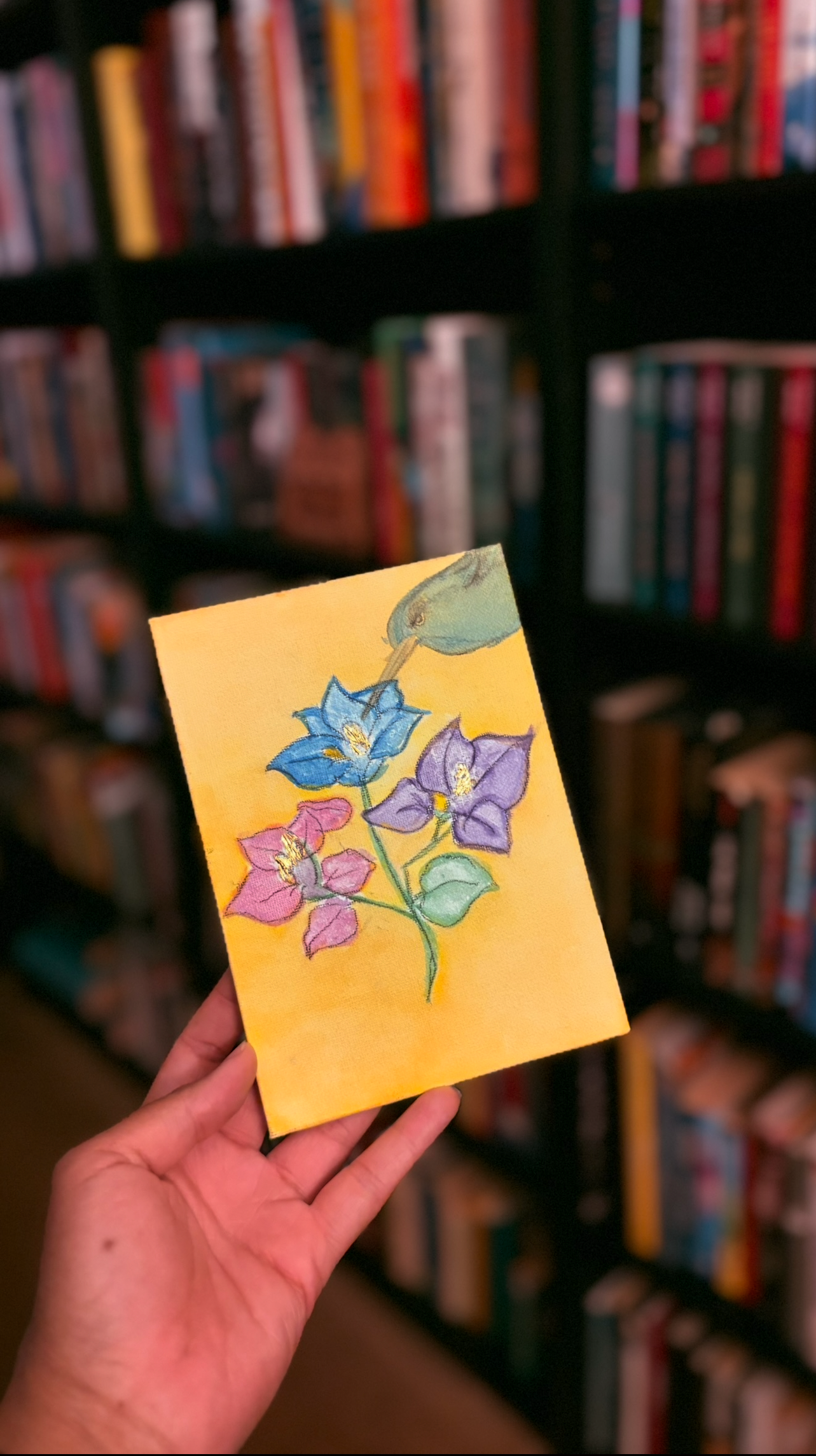
When we talk about value, these questions have to be considered.
We have to talk about judgment. A sticky subject that we either bulldoze our way through with our absolute statements or skirt around and acknowledge only as necessary. To establish something as valuable, we have to establish some form of authority that is credible enough to judge said value. This is why we have countless ways for artists to receive a trophy and a nod from their community, to know that the thing they created is of some value, or at least worth some recognition.
Yet, when we talk about value, we also have to consider individual standards. One could argue that value can only be set if there’s an agreed-upon standard, but if we’re honest, most of our standards are different and fluid, at best, evolving and moving with time and circumstance.
And with these questions, and judgement, and standards, we have to talk about technology, because I am unsure we can truly talk about a piece of culture, like art, without talking about technology. And with technology, we have to talk about AI and how it plays in the conversation around value.
As a millennial, I have the privilege of knowing life with and without the internet. Life without immediate access to information or communication with others. Information was found in a book that you had to learn the Dewey system to find. Social media was a thing you came home to check on the family computer at the end of the day, almost like background noise, compared to the constant life cycle of the internet that it is now.
I’ve known a life where walking around with a literal computer in your pocket was not our reality…
… until it was.
Where the concept of AI was some distant idea that we read about in sci-fi books, and the occasional movie that made it out of Hollywood…
… until it wasn’t.
Technology is moving at such a pace that has propelled our society further and faster in ways that I am unsure we can keep up with. It is to that fact that I believe that AI art will ultimately make human creativity more valuable.
I recently went to an event hosted at my local museum that dove into the conversation around AI, Connection, and Third Spaces, how people are craving community IRL over the internet. From that conversation, I heard a quote that will probably stick with me for a while:
artists are the conscience of the culture.
Whatever the medium is, visual, dance, song, literature, etc., the artists are the conscience, the ones who communicate the feeling, the mood, the message to our society. The ones pouring their heart and soul into their work, that at the end of the day, may or may not be considered “valuable” to the next person, and yet, they do it anyway. The ones who sit with the process, and chip away at the edges until they are left with a body of work they’re proud of, or at least a body of work they feel is complete.
It’s the humanity of the art, the way we connect to scribble presented to us by a child we love, a song where we hear the tears under the mic, and a dance that we know must hurt, because if we put our leg in the same position, surgery may be required. It’s the humanity of why we even give a damn in the first place, because things created by technology are useful, efficient, and some would even argue beautiful, but is it valuable… when it comes to art, I personally don’t think so.
Ironically, the person with whom I am doing this Substack challenge has different opinions about AI than I do, and I honestly can’t wait to read his piece about it. His argument, after we debated for literal hours, is that because AI doesn’t have a soul, it can only generate what a human has prompted it to do, and the art generated by AI, is still valuable. However, for me, because AI doesn’t have a soul, it doesn’t create, it generates; and I am not comfortable calling what’s generated art.
Is the creation of an idea enough to consider yourself an artist? We hear people so often say how they were the ones to have the original idea of some famous invention, and while that’s noble and possibly true, having the idea and putting in the work to turn that idea to fruition are two different things. I would suggest to anyone to complete a body of work from start to finish, and they’ll quickly see that simply having the idea was never enough. I would suggest to anyone to complete a body of work and then come back with a solid opinion about AI art, because I firmly believe that one cannot go through the tactile process of laboring through an idea and turning it into something tangible, and being okay with something generated in seconds.
I have sat in rooms with composers who have wrestled with one line of a song that may not even make it on the album, because they wanted to convey a particular meaning. I have watched background vocalists sing the same part over and over again for hours because the blend of voices was slightly off, not the harmony, but the tone of the voices, something the average person wouldn’t pick up anyway. I’ve seen recipe developers cook the same meal for countless retries because one ingredient may be off by a ¼ of a teaspoon. Dancers who will try the same spin until their body physically cannot take it, and then get up and push some more. Writers who’ve wrestled with words, pacing, tone, and setting just to convey a message. That type of grit and endurance cannot be replicated by AI, and it is through that grit and endurance in which art is made. At least for me. Art that I respect.
We used to be able to see a thing and know it to be real and authentic, until apps like Photoshop came along, and we had to look a little longer, and we eventually we learned. I would like to think that maybe the same can be said about AI, that we’ll learn what’s real, what’s fake, what’s generated vs. created, but I fear this time around won’t be so simple. Our world is so saturated with things that are passed off as real and “valuable” that I suspect we will start to move more analog, and with that move, hopefully, comes the rise of human creativity. The value in it. The true, priceless nature of what it means to create. To be clear, human creativity hasn’t gone anywhere, and it never will, but its value will start to climb. And maybe one day, we will have AI to thank for our return back to human-made, human-touched, human-loved creativity.